
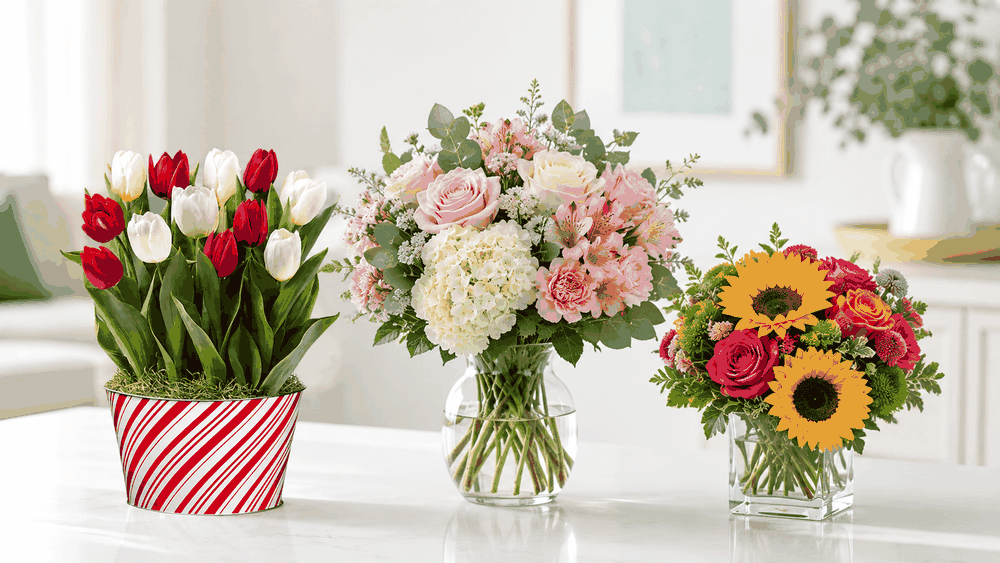
Flowers can celebrate a happy moment, show appreciation, offer support, express love, or simply make someone smile.
But choosing an arrangement can feel difficult when there are so many colors, flower varieties, sizes, and styles to consider.
The good news is that there is no single “correct” bouquet for every occasion. The best arrangement is usually the one that fits the recipient, the moment, and the message behind the gift.
Here is a practical guide to choosing flowers with confidence.
Begin With the Occasion
The occasion gives you a helpful starting point.
For birthdays, congratulations, and celebrations, bright and colorful arrangements often feel cheerful and energetic. For anniversaries or romantic gestures, roses, soft garden-style flowers, or deeper tones may create a more intimate feeling.
For sympathy or support, softer palettes can feel calm and thoughtful. White, cream, pale pink, lavender, and gentle greens are often chosen because they create a peaceful visual effect.
For thank-you gifts, friendship, or everyday surprises, a mixed arrangement with warm and uplifting colors can be a wonderful choice.
The goal is not to follow strict rules. It is to select flowers that match the emotion you want to share.
Think About the Recipient’s Personality
The most meaningful arrangement is often the one that feels personal.
Consider the recipient’s favorite colors, home style, personality, and preferences. Someone who loves bright clothing and bold décor may enjoy orange, yellow, hot pink, or mixed seasonal flowers.
Someone with a more classic or minimalist style may prefer white blooms, soft pastels, greenery, or a simple single-color design.
Ask yourself:
- Do they prefer bold or soft colors?
- Do they like modern, elegant, romantic, or natural styles?
- Is there a flower they especially love?
- Are there flowers or scents they dislike?
- Would they prefer something playful or something refined?
Even one small personal detail can make an arrangement feel more thoughtful.
Choose the Right Size for the Space
The size of an arrangement matters just as much as the flowers inside it.
A small arrangement can be perfect for a desk, bedside table, office, apartment, or small thank-you gesture. It feels personal, easy to display, and does not overwhelm the space.
A medium arrangement is often the most versatile choice. It works well for birthdays, homes, offices, anniversaries, celebrations, and casual gatherings.
A large arrangement creates more visual impact. It can be ideal for milestone birthdays, anniversaries, group gifts, major celebrations, events, memorials, or larger spaces.
Before choosing, consider where the flowers are likely to be placed:
- A low arrangement works well for a dining table because it does not block conversation.
- A taller design can look beautiful in an entryway or on a reception desk.
- A compact vase arrangement may be better for a hospital room or office workspace.
- A fuller centerpiece can be more appropriate for a party, event, or celebration table.
Let Color Set the Mood
Color is one of the easiest ways to shape the feeling of an arrangement.
Bright yellows, oranges, and mixed colors often feel joyful and lively. Pink and peach tones can feel warm, gentle, and affectionate. White and green arrangements tend to look elegant, calm, and timeless.
Red and burgundy flowers can create a dramatic or romantic look. Lavender, purple, and blue-toned flowers can feel creative, peaceful, or sophisticated.
Color meanings are not universal rules. Personal preference is always more important than tradition.
For example, a person who loves yellow may be happier receiving yellow flowers for an anniversary than red roses. The best color is often the one that feels most like them.
Consider the Arrangement Style
Flower arrangements come in many styles, and each creates a different impression.
A traditional bouquet may feel classic and polished. A garden-style arrangement can feel soft, natural, and romantic. A modern design may use clean lines, unusual textures, and fewer flower varieties.
Here are a few common styles to consider:
- Classic: balanced shapes, roses, lilies, carnations, and traditional color combinations.
- Garden-style: loose, natural movement with mixed blooms, greenery, and soft textures.
- Modern: bold lines, simple palettes, sculptural flowers, and contemporary containers.
- Bright and cheerful: colorful flowers with playful energy for celebrations and birthdays.
- Soft and elegant: neutral or pastel blooms for sympathy, calm spaces, or refined occasions.
The style should match both the occasion and the recipient’s taste.
Think About Practical Details
A beautiful arrangement should also be practical.
If the recipient may not have a vase available, choose flowers already arranged in a vase or container. This makes the gift easy to enjoy immediately.
For a workplace, avoid arrangements that are too tall, too wide, or heavily scented. For a dining table, choose a design that stays low enough for people to see across the table.
If flowers are being sent to a hospital, hotel, funeral home, school, or event venue, check whether the location has delivery restrictions or policies.
It is also worth considering pets, allergies, strong fragrances, and available space.
Add a Meaningful Card Message
The message that accompanies the flowers can make the gift even more memorable.
It does not need to be long. A sincere sentence is often enough.
Examples include:
- “Thinking of you today.”
- “Congratulations on this beautiful milestone.”
- “Thank you for everything you do.”
- “Sending love and a little brightness.”
- “Wishing you comfort and peace.”
- “You deserve to be celebrated.”
Flowers create the visual moment. The card message adds the personal connection.
Choose With Intention, Not Perfection
There is no need to know every flower name or follow every traditional rule.
The right arrangement is one that feels sincere, fits the occasion, and reflects the person receiving it. A small bouquet chosen with care can mean more than a large arrangement chosen without thought.
When flowers are selected with intention, they become more than a gift. They become a memorable gesture.